
The Unseen Backbone of Industrial Transformation
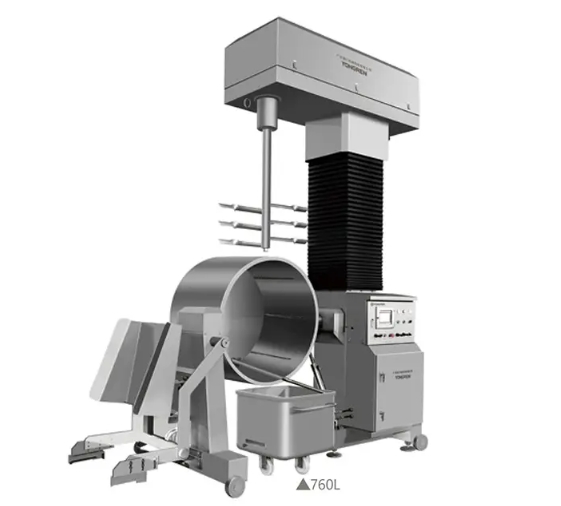
When Huainan Huiwang Bean Product Equipment Company struggled with quality inconsistencies in its soybean processing machinery, the local market regulator didn’t impose penalties—it handed them a blueprint. Collaborating with the Huainan Institute of Standardization, the company co-developed China’s first industry standards for fuzhu (dried tofu skin) and soybean milk film production lines. The result? Domestic market share dominance and a historic export breakthrough into the U.S. this year. This exemplifies China’s national strategy: deploying standardization as a stealth weapon to transform regional specialties into global industrial contenders.
Policy Frameworks as Growth Accelerators
In the central Chinese city of Luohe, known as the "Equipment Capital of China’s Food Industry," policy leverage is systematically dismantling innovation barriers. Newly established food machinery enterprises benefit from tax incentives, R&D subsidies, and reduced land rents. More crucially, Luohe’s government engineered high-value institutional assets—it secured the country’s first "Food Equipment City" designation and established the Leisure Food Processing Machinery Standardization Working Group under the National Technical Committee for Food Machinery. These platforms converge academic research (like the Zhongyuan Food Laboratory) with industry, enabling companies such as Tianheng Machinery to invest $55,000+ annually in automation R&D. The target is unambiguous: 200+ large-scale equipment manufacturers and $1.4 billion in output by 2026.

The Export Playbook: Standardization as Market Entry Credential
Huainan’s approach reveals how standards bypass traditional trade walls. After publishing the two industry standards for bean product machinery in March 2024, local manufacturers saw Southeast Asian orders surge by 40%. Why? Standards function as technical trust certificates. Importers facing maintenance risks or compatibility issues prioritize ISO-compatible machinery. Similarly, Luohe’s meat processing equipment—honed via partnerships with giants like Shineway—now integrates EU safety benchmarks, easing European market entry. The unspoken advantage: Chinese standards are evolving into de facto global specifications for niche segments like fermented bean curd or spicy strip production lines.
Cascading Impacts on Supply Chain Ecology
Standardization’s ripple effects reconfigure entire value chains:
-
SME Onboarding: Huainan’s standardized production modules allow small tofu workshops to upgrade using compatible, modular equipment—slashing costs by 30%.
-
Talent Magnetism: Luohe’s "standardized industry" label attracts automation talent from first-tier cities, with 15% YoY growth in mechanical engineers.
-
Green Manufacturing: Bean processing equipment adhering to new standards reduces water consumption by 22% through closed-loop water recycling—a criteria embedded in Huainan’s technical documents.
The Geostrategic Game Ahead
China’s standardization push faces two challenges: avoiding fragmentation (e.g., provincial standards clashing with national frameworks) and accelerating international certification reciprocity. The recent establishment of the National Food Machinery Standardization Committee’s Soybean Processing Working Group in Huainan signals centralization1. Meanwhile, Luohe negotiates mutual recognition pacts with German and Japanese standards bodies—aiming to convert China’s technical sovereignty into pricing power. For global players, this means either adopting these specs or risking exclusion from the world’s largest food supply chain revolution.