
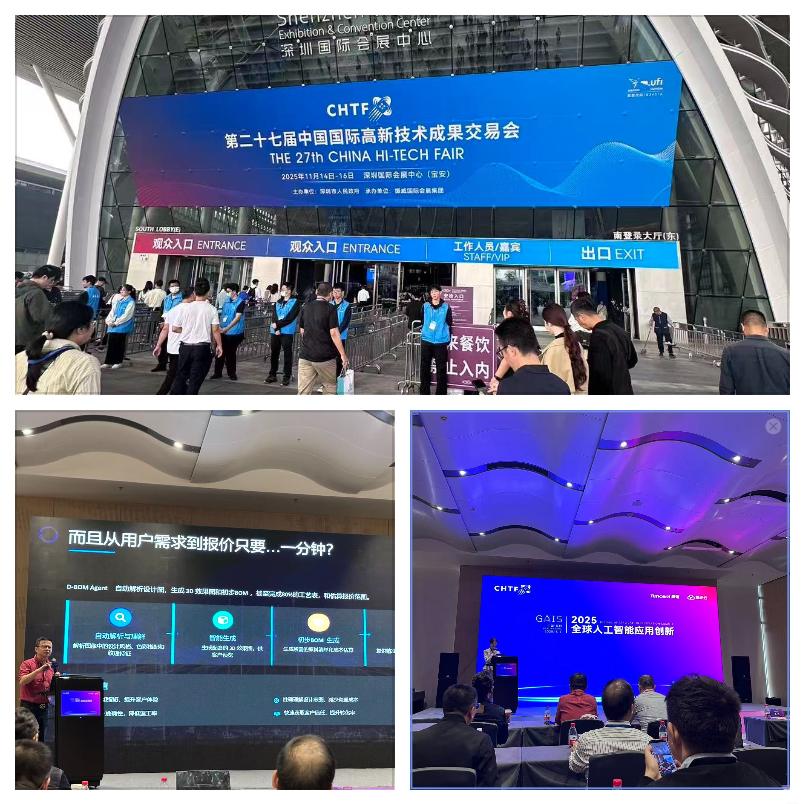
Recently, the FoodTechX team conducted a tour at the 27th China Hi-Tech Fair as one of the leading global Food Tech B2B supply chain platforms. This year's exhibition, with the theme "Sci-Tech Reform Drives High-Quality Development," attracted over 3,000 global technology enterprises to share the latest achievements in areas such as artificial intelligence, industrial IoT, and green energy. Based on this year's China Hi-Tech Fair, FoodTechX has been deeply exploring, from a full industry chain point of view ranging from farm to fork, the potential of integrating these high-end technologies into the food industry for painting a more imaginative digital-intelligent blueprint for global food factory clients.
I. Tencent Hunyuan Large Model: AI Decision-making Power Reshapes Supply Chain Management
In the AI Lab of the Tencent exhibition area, the FoodTechX technical team focused on experiencing the multimodal analysis capabilities of the Tencent Hunyuan Large Model. This model deeply learns the hundreds of thousands of data dimensions in global agricultural price fluctuations, port throughput, and regional consumption preferences and provides dynamic procurement decision support for companies. The FoodTechX Supply Chain Director gave a live demonstration: once extreme weather hit a Southeast Asian country, the system was able to generate an alternative raw material supply plan in just 10 minutes, increasing efficiency nearly a hundredfold compared with traditional manual operations.
"This is the very core technology we need!" said the FoodTechX General Manager, noting that the platform is discussing the directions of cooperation with Tencent Cloud on a global intelligent raw material sourcing system. Plans call for using the Hunyuan Large Model in real-time data analysis to help SMEs with risk alerts and the optimal procurement path for more than 2,000 agricultural products in 120 countries.
II. Industrial IoT: From Device Interconnection to Autonomous Decision-Making
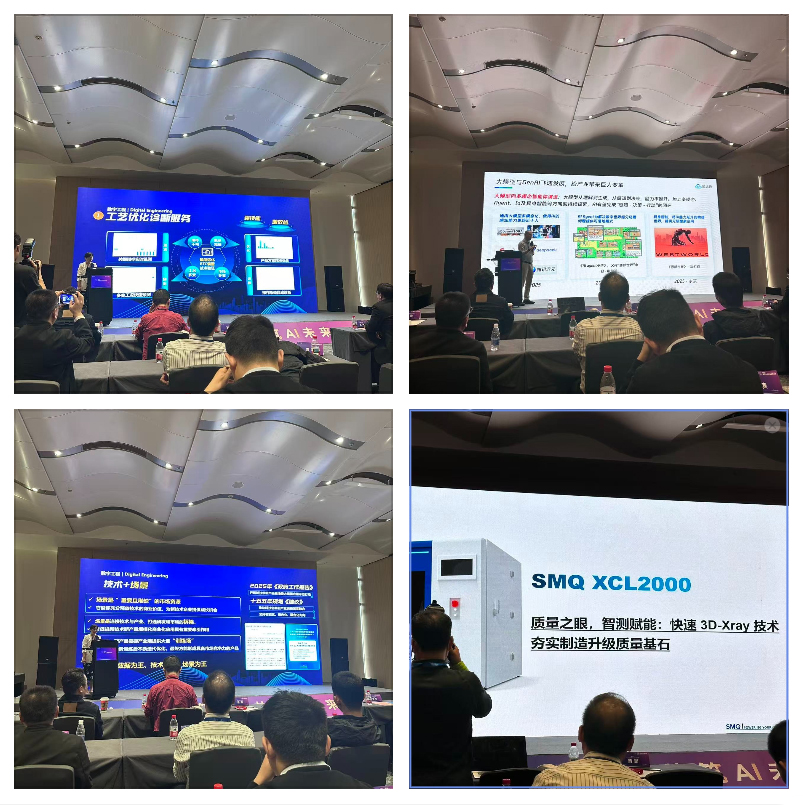
In the IIoT exhibition area, the Siemens-Inovance booth demonstrated the synergy of edge computing and cloud platforms. According to the case shared from a dairy company, by deploying intelligent sensors and real-time data analysis systems, equipment failure warnings reached 92% in accuracy and energy consumption was reduced by 15%. The FoodTechX Digital Business Unit General Manager pointed out, "This system highly complements the flexible food factory solution we are developing, making it particularly suitable for the seasonal capacity adjustments of prepared meal companies."
Notably, an AI inference acceleration card jointly released by Tencent Cloud and Cambricon is already being applied in the inspection of food quality. Data from an intelligent sorting equipment manufacturer showed that after installing this chip, the foreign object detection rate for nut products increased from 98% to 99.97%, which could potentially reduce tens of millions in losses annually for enterprises.
III. Green Technology: China's Practice of Zero-Carbon Factories
FoodTechX performed an in-depth analysis of BYD's Blade Battery technology during the new energy exhibition zone. Test data of cold chain logistics vehicles with Blade Batteries showed that under daily operating conditions of 200 km, vehicle energy consumption was reduced by 22% compared to traditional lead-acid batteries, and battery life has tripled. According to the Green Supply Chain Lead of FoodTechX, "This is highly important for fresh food delivery across borders. We are working together with companies like BYD to develop the New Energy Cold Chain network for Southeast Asian customers, which can cut carbon dioxide emissions by more than 50,000 tons annually."
Also in the energy storage technology session, FoodTechX held discussions on the sodium-ion battery energy storage system of CATL, which featured excellent high-low temperature adaptation characteristics. The platform is exploring its application in food processing parks as part of integrated photovoltaicstorage solutions, looking to reduce electricity costs by 40%.
IV. Cross-Border Ecosystem: Digital Bridges Connect the Global Food Industry
In the dedicated zone for special cross-border e-commerce platforms, FoodTechX focused on the applications of AI product selection systems and global live streaming integrated machines. Data shows that through the use of AI algorithms to analyze overseas market trends, the success rate of new product development for enterprises increased by 65%. The head of the International Business Department of FoodTechX revealed, "We are in contact with several cross-border technology service providers, with plans to embed such capabilities as AI product selection and blockchain traceability into our global supply chain network, to help domestic food machinery enterprises tap markets like the Middle East and Africa with precision."
In the blockchain zone, FoodTechX observed the cross-border traceability solutions of established blockchain technology firms. This is a technology based on a consortium chain architecture that supports the traceability of raw material procurement, production process, and logistics tracking data with tamper-proof records to meet international certifications such as EU and US FDA. The platform is going to add such technologies in future products to help clients reduce their compliance costs.
V. Smart Manufacturing-Making the Leap from Concept to Reality
In the industrial robotics section, KUKA showcased a collaborative robot performing simulated food packaging tasks with millimeter-level precision and flexible programming. According to the engineer from FoodTechX, "This kind of robot can perfectly meet the needs of multi-category and small-batch production in prepared meal factories. We are exploring its connection with our distribution system for achieving full automation in the whole link from raw material procurement and production scheduling to logistics distribution."
Specifically, Bosch Rexroth showed strong adaptability with its modular production line in the flexible manufacturing zone. FoodTechX will discuss customized food factory solutions with them, lowering the construction cycles of factories by 60% with standardized module combination.
VI. Metaverse and Frontier Exploration: Envisioning the Future Form of the Food Industry
In the Tencent Digital Twin exhibition area, the FoodTechX team experienced a virtual factory operation and maintenance system. Managers can remotely debug equipment, optimize processes, and even hold crisis drills through VR equipment and real-time data mapping. The FoodTechX CTO added, "It will be integrated into our intelligent operation platform and is expected to increase the efficiency of remote management for overseas factories by 80%."
In the BCI zone, NeuraLink's neural signal monitoring devices sparked innovative ideas. "In the future, it might be possible to customize nutritional plans and flavor combinations based on monitoring consumers' brainwaves." This has already been listed in the research plan of the FoodTechX Innovation Lab, which explores the 'Metaverse+' possibilities for food technology.
Conclusion: Open Collaboration for a Common Future
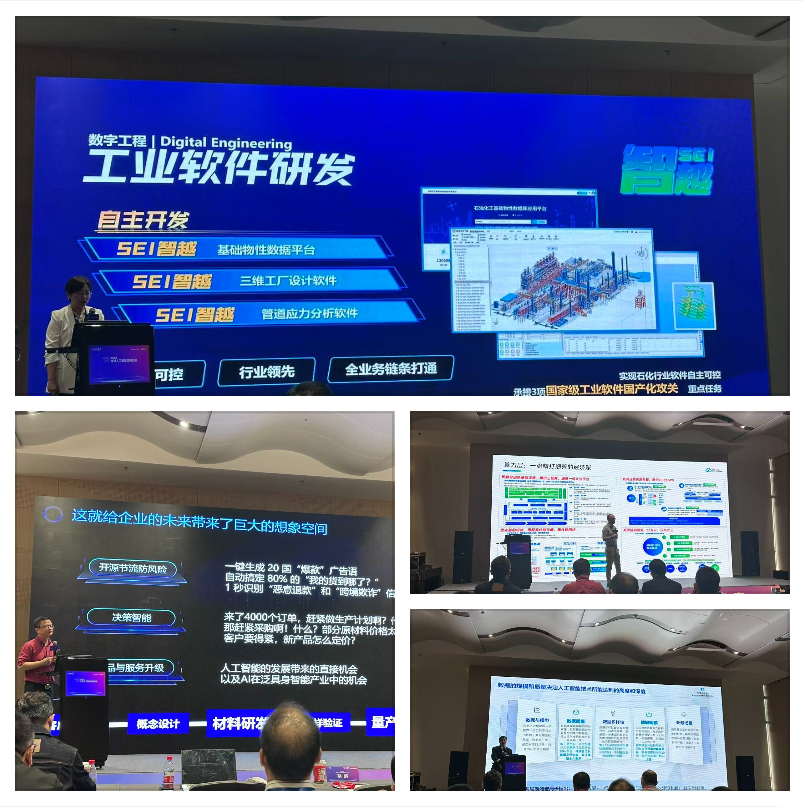
The 27th CHTF conveyed a message directly: the digital-intelligent revolution has stepped into the deep-water zone in the food industry. As a "super connector" in the global food technology supply chain, FoodTechX consistently adheres to an open cooperation philosophy, maintains close communication with leading enterprises like Tencent Cloud, BYD, and Bosch Rexroth, and promotes technology implementation around four key directions: AI decision-making, green energy, flexible manufacturing, and cross-border collaboration. Currently, the platform has formed three core advantages:
Technology Integration Power: Rapidly connects with advanced global technological achievements.
Scenario Adaptation Power: Deep cultivation in the particular needs of the segments of food industries.
Ecosystem Building Power: Establishing cross-industry collaborative innovation platforms.
As the exhibition theme stated, it has been "Sci-Tech Reform Drives High-Quality Development." FoodTechX will continue to deeply cultivate the full-chain digital-intelligent track "from farm to fork," aggregating global wisdom with an open stance to create a more efficient, transparent, and sustainable future for the food industry.
Note: This article is AI-generated. It focuses on the vision for future food technology; some points may differ from actual circumstance.