
Picture this: You pour your morning coffee, add a spoonful of sweetener, and it tastes just like sugar—but there’s no blood sugar spike, no guilt. Chocolates you can actually enjoy. Bakeries stacked with pastries that won’t haunt you later. Sounds wild, but this is real life in 2025, and erythritol is driving it all. This zero-calorie sugar alcohol, made by fermenting glucose, delivers about 60-80% the sweetness of regular sugar with none of the glycemic baggage. Keto fans, people with diabetes, and eco-conscious shoppers have all jumped on the erythritol train. Health concerns keep growing—diabetes alone is expected to hit 783 million cases by 2045—so demand for better sweeteners is blowing up. The erythritol market’s worth $316.62 million in 2025, and it’s on track to hit $519.05 million by 2034, growing at 5.54% each year. But it’s not just about making snacks sweeter. Food processing equipment has to keep up: think smarter mixers, more precise fermenters, and greener extruders, all designed to handle erythritol’s quirks. These days, “clean label” foods are what everyone wants, and erythritol isn’t just another ingredient—it’s shaping a whole new high-tech, healthier food world.
Market Momentum: From Specialty to Staple
Erythritol isn’t just having a moment—it’s taking over. This year, it leaves competitors like xylitol in the dust, thanks to its flexibility and broad appeal. The global market hit $275.6 million in 2024, and it’s already climbing to $293.4 million in 2025, with projections pointing to $474.1 million by 2034. North America leads the pack, grabbing 35% of the market, partly because the FDA keeps a tight leash on low-calorie sweeteners and local shoppers love their functional foods. Europe isn’t far behind, pushed by EU rules demanding less sugar in cereals and drinks. Over in Asia-Pacific, China’s fermentation factories are powering the fastest growth—7.2% a year through 2030.
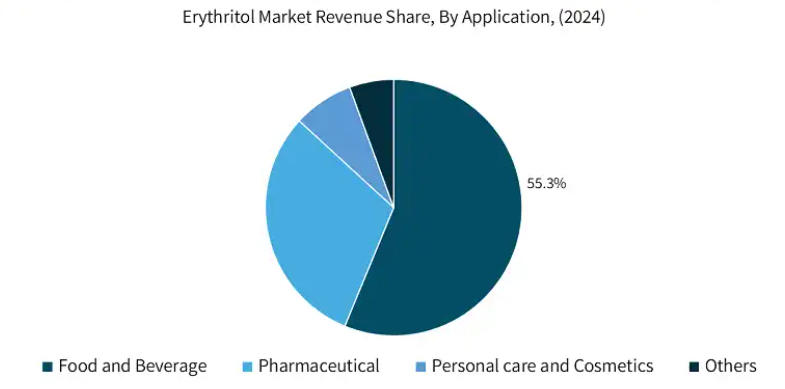
Drinks are the clear winner here, making up 40% of erythritol use. Just look at PepsiCo—they launched zero-sugar colas with natural fruit flavors in 2025, and sales jumped by 12%, according to Nielsen. Candy’s not missing out, either. Mars Wrigley’s erythritol-based gums and chews have basically taken over gum aisles, giving people something sweet that’s actually good for their teeth and not sticky like old-school polyols. Dairy makers love it too; erythritol gives low-fat yogurt and ice cream a cool, creamy feel, without that weird icy texture you get when you cut sugar. Baked goods round out the picture—erythritol stands up to heat, so muffins come out fluffy, cookies stay crisp, and you don’t have to settle for less.
This surge in demand didn’t happen by accident. After some scary heart health headlines in 2023, new studies in 2025—published in the Journal of Nutrition—put those fears to rest, showing erythritol is safe to eat in normal amounts (less than 30g per day). Regulators helped, too. The FDA reaffirmed erythritol’s GRAS status in early 2025, and in Europe, EFSA gave it the green light for use in baby food. On top of that, erythritol’s eco-friendly credentials are a big selling point: making it from corn uses 90% less CO2 than cane sugar, lining up perfectly with the EU’s Green Deal and Scope 3 emission goals.
Production Pioneers: Fermentation Breakthroughs and Cheaper Sweetness
There’s a lot going on behind the scenes. Erythritol used to be expensive to make—making it with yeast from glucose took a ton of energy, and you’d only get about 40-50% of what you put in, with costs at $4-6 per kilo. Fast forward to 2025, and biotech has changed the game. Thanks to genetically tweaked Yarrowia lipolytica strains, yields have shot up to 85% in just two days, bringing costs down to $2.5 per kilo. Ingredion’s $120 million upgrade in Illinois is a prime example: their new continuous stirred-tank reactors (CSTRs), fine-tuned for pH, now churn out 99.9% pure erythritol, cutting way down on crystallization headaches.
Cargill and Archer Daniels Midland (ADM) are racing to outdo each other. Cargill’s new osmolyte engineering, published in Food Chemistry, helps microbes handle more glucose, boosting output by 30%. ADM, meanwhile, mixed enzymes and fermentation in Brazil to turn sugarcane waste into erythritol, cutting raw material costs by a quarter and making the whole process more sustainable. These aren’t just pilot projects—they’re ramping up worldwide. China’s Futaste Pharmaceutical, for instance, plans to hit 20,000 tons a year by December.
Making erythritol isn’t without its challenges. It loves to soak up moisture, which means it clumps in humid places. That’s why new spray dryers with anti-stick features are now standard. In drinks, it dissolves fast, but you have to control foam—Tetra Pak’s new ErythroFlow modules tackle this with ultrasonic cavitation, giving manufacturers a smooth, bubble-free mix.
Equipment Evolution: Tech That Keeps Up With Erythritol
Erythritol's unique traits—its grainy flow similar to fine sand, zero-calorie nature, and ability to withstand heat—excite equipment manufacturers, but they require some adjustments.In mixing stages high-shear ribbon blenders with adjustable speeds (up to 500 RPM) make sure doughs mix stopping "hot spots" that could change browning through uneven Maillard reactions. For drinks, Krones' VolumetricFill Pro, updated in March 2025, has servo-driven pistons set for erythritol's density (1.45 g/cm³), reaching ±0.5ml fill precision at 60,000 bottles per hour—key for sparkling waters where too much filling risks losing carbonation.
Candy production lines also see improvements. Bühler's vacuum cookers now fitted with special evaporators for erythritol, keep temperatures between 120-140°C. This takes advantage of erythritol's ability to not caramelize resulting in shiny hard candies without needing inversion syrups. For protein bar production, Clextral uses twin-screw systems with cooling dies. These counteract the cooling effect of erythritol making sure the bars stay solid without becoming too brittle. Dairy companies love GEA's Tetra Alex homogenizers. These now have valve seats that can handle erythritol resisting wear from its sharp crystals. This helps flavored milks last 20% longer on the shelf.
All these changes make these processes more sustainable. Fermentation tanks now have IoT-monitored zones without oxygen, which cut energy by 15% through smart aeration. ADM recycles wastewater from crystallization, which contains leftover glucose using membrane bioreactors. This aligns with their goals to discharge zero liquid. For packaging, Multivac's thermoformers now include nitrogen flushers that work well with erythritol preventing oxidation in gum pouches.
Some problems remain: erythritol can cause laxative effects at high doses (over 50g) so companies need exact dosing equipment such as inline NIR spectrometers to check concentrations in real-time. Supply chain issues due to corn price changes - up 8% in 2025 - lead to a push for extruders that can handle different raw materials.Even so, the return on investment is quick: a medium-sized bakery that upgrades to use erythritol sees its investment pay off in 18 months through higher prices (20% increase on reduced-calorie products).
The Future Looks Sweet: Erythritol's Ultimate Role in a World with Less Sugar
By 2030, erythritol might grab 15% of the $50 billion sugar alcohol market, according to Grand View Research. New techniques like nano-encapsulation will make it possible to create heat-resistant drinks and 3D-printed sweets. Manufacturing equipment will keep changing: production lines controlled by AI will adjust for erythritol mixes with monk fruit or stevia cutting down on research and development time.For food makers, it's a clever shift—use erythritol, and you're not just reducing calories; you're shaping tasty futures. As an Icon Foods expert said in their end-of-year forecast, "Erythritol isn't getting rid of sugar—it's outshining it." In 2025's taste testing room, that's the ultimate treat.