
In order to further clarify the research and development and review requirements for health food sterilization process conditions, our center organized a special seminar to study the review-related issues. The relevant information is now released as follows for reference when applying for health food registration.
Commonly used sterilization methods and key process parameters of health food
Commonly used sterilization methods in health food processing include moist heat sterilization (including circulating steam sterilization, hot pressure sterilization), radiation sterilisation, microwave sterilisation, filtration sterilization, instant high temperature sterilization, etc.
The moist heat sterilization method is the most effective and widely used sterilization method among thermal sterilization. Solid preparations, oral liquids, and raw materials or finished products that do not change or be damaged when exposed to high temperatures and humidity can be sterilized by this method. The key process parameters are temperature and time.
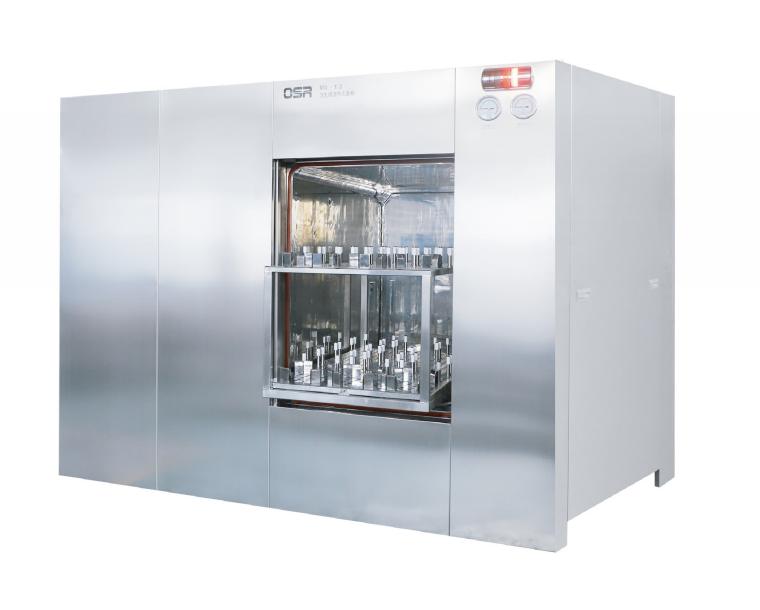
The instant high-temperature sterilization method is a method that effectively retains the functional components of the liquid material to be sterilized. The liquid is rapidly cooled to room temperature after being treated at high temperature and for a short time in a closed system. It is mainly used for sterilizing beverages. The key process parameters are temperature and time. This method needs to comprehensively consider the pH value of the product, initial contamination, production environment and shelf life requirements, and should be used in conjunction with the aseptic filling process. Among them, the ultra-high temperature instant sterilization method usually uses 130~150℃ for 3~5 seconds.
The microwave sterilization method uses the combined action of thermal and non-thermal effects to uniformly and rapidly heat the inside and outside of items to achieve sterilization. Currently, it is mainly used for the sterilization of powdered or fine granular raw materials and finished products. The key process parameters are microwave frequency and time.
The filtration sterilization method uses the principle that bacteria cannot pass through dense porous filter materials to remove microorganisms in liquids. It is often used to sterilize liquids containing thermally unstable components. The key process parameter is the pore size of the filter material (generally ≤0.22µm).
The most commonly used radiation sterilization method is 60Co-γ irradiation sterilization, which is mainly suitable for solid raw materials and final products that are not prone to quality changes under radiation sterilization conditions. The key process parameters are radiation source and radiation dose.
Note:
1. Gas sterilization method: Ozone has strong oxidizing properties and is non-penetrating and cannot guarantee stable product quality. Ethylene oxide and formaldehyde have obvious toxic and side effects. They are not processing aids specified in GB2760 "National Food Safety Standard - Food Additive Usage Standard" and must not be used for sterilization of health food raw materials and finished products.
2. Ultraviolet sterilization can be used for surface disinfection, but is generally not used for sterilizing final products or raw materials.
Research requirements for health food sterilization process conditions
The determination of health food sterilization methods and process parameters should be based on the premise that they will not cause substantial changes in the quality of raw materials or finished products. At the same time, the composition of the sterilized materials (such as preservatives, amino acid protein content, etc.), physical and chemical characteristics (such as properties, pH value, osmotic pressure, etc.) and initial contamination conditions, as well as the effectiveness of the sterilization method, the stability of the materials after sterilization, final product packaging and other factors, should be comprehensively considered to strictly control the quality and safety risks of the product under the selected sterilization conditions. For sterilization process research data, the requirements are different depending on the basis of product sterilization methods and parameters.
(1) For sterilization using the sterilization conditions for food or oral preparations contained in relevant national standards and the Chinese Pharmacopoeia, it is not required to provide research data establishing the sterilization conditions. However, the changes in the content of functional ingredients/iconic ingredients, sensory and microbial counts (total bacterial colonies, coliforms) in the samples before and after sterilization should be investigated, and the applicability of the sterilization conditions should be explained.
(2) For food or oral preparation sterilization methods recorded in relevant national standards and the Chinese Pharmacopoeia, but the sterilization process parameters are selected by oneself, the source of the sterilization method and process parameters, the rational basis for selection and determination, and the following research information should be provided.
1. Comparative study on the impact of different sterilization process parameters on efficacy/iconic ingredient content
Use the detection methods specified in the product technical requirements to conduct a comparative study on the changes in the content of functional ingredients/iconic ingredients after treatment with different process parameters.
2. Comparative study on changes in microbial status after treatment with different sterilization process parameters
Refer to the "Chinese Pharmacopoeia" and use different biological indicators (generally bacterial spores) and total bacterial colonies, coliforms, Staphylococcus aureus, and Salmonella indicators according to different sterilization methods to examine the microbial status of the samples after treatment with different sterilization parameters.
3. Comparative study on the impact of different sterilization process parameters on product sensory indicators
Using the detection methods specified in the product technical requirements, a comparative study was conducted on the changes in sensory indicators of the product after treatment with different process parameters.
Requirements for irradiation sterilization of health foods
The necessity and rationality of irradiation sterilization of health food and raw materials should be fully explained. In order to achieve the sterilization effect and minimize the risk of impact on product quality and safety, it is recommended to use low-dose irradiation sterilization as much as possible, and a comparative study before and after irradiation should be carried out to fully explain the changes in the types or contents of ingredients in health foods before and after irradiation sterilization and their sterilization effect, and to prove the rationality of the sterilization process parameters used. Some studies have shown that the irradiation process may affect product quality and safety, or there are regulations that prohibit the use of materials for irradiation sterilization, and irradiation sterilization must not be used.
Source: https://www.cfe-samr.org.cn/zyyw/bjsp/jsspyqzl/cpscgy/202110/t20211008_3972.html