
As global warming and resource dearth reshape the agriculture game, a paradigm-shifting worldwide meta-analysis has come forward with the pivotal positioning that use of mulch films must take to provide productivity and planetary health in synch. Entitled "Evaluating sustainability tradeoffs of agricultural plastic mulch films through a global meta-analysis" the paper—posted to the Journal of Cleaner Production on September 10, 2025—is all about the double-edged nature of conventional polyethylene mulch (PM) and new soil-biodegradable mulch (BDM). Written by a worldwide research team comprising Yuanchen Sun of China Agricultural University, Wenqing He of Northwest A&F University, and co-authors at McGill University and Texas A&M University, the article integrates more than 4,331 experiment records from more than 724 peer-reviewed journals and gives a holistic guide to sustainable agriculture.

In the B2B food processing and equipment industry, however, this is not just pedantic academicism—it's a call to action in the form of innovation. As suppliers and buyers meet online to buy machinery for green production lines, the research looks at the sheer demand for biodegradable-compatible technology that lifts food security without fueling further destruction of the environment. "BDM has greater greenhouse gas abatement and environment scope than PM," they contend, pointing to one path where agronomic gain intersects with net-zero ambition.
Total, the research is providing an answer to one of the pressing questions confronting present-day agriculture: optimizing plant yield and efficiency through resources while reducing greenhouse gas (GHG) emissions to the highest degree possible. Farm mulch films—thin, plastic coverings that are applied to the earth to suppress weeds, retain water, and regulate heat—have been a feature of global agriculture for centuries. However, their overall application has been controversial concerning plastic pollution and greenhouse gas emissions. Authors, drawing on such sources as Web of Science and Google Scholar through December 2024, carried out a very rigorous meta-analysis to contrast PM (long-term but non-biodegradable) with BDM (engineered to biodegrade naturally in the environment).
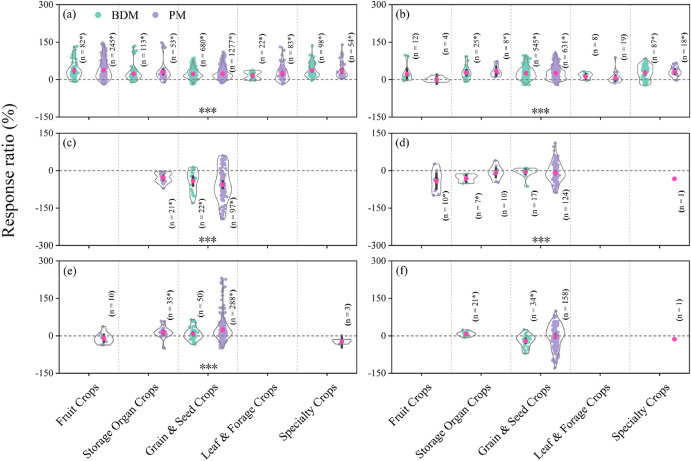
The strategy was integrated, aggregating results over climates, crops, and sites to be world-wide representative. Factors considered were crop yield, water use efficiency (WUE), methane (CH4) and nitrous oxide (N2O) fluxes, and global warming potential (GWP). Quantitative synthesis assigned numbers to striking similarities and contrasts: both mulches raised yields—PM by 29.53% and BDM by 27.72% above control, unmunched plots—but their environmental signatures were starkly different.
Significant findings present a balanced image. Agronomically, both the mulch films encouraged productivity overall. Crop yields were boosted by a mean of 28.86%, and WUE—a highly critical parameter for water-starved regions—improved by 33.09%. PM marginally surpassed in this regard with a 47.27% improvement in WUE over BDM's 20.28%, and thus emerging as a top contender for arid regions where irrigation is paramount. Emission-wise, they were both suppressed CH4 fluxes (PM: 48.28%, BDM: 31.68%), which are advantageous in its mitigation effect on that potent GHG. But they boosted N2O emissions (PM: 24.03%, BDM: 8.60%), a testament to the urgency of integrated nutrient management.

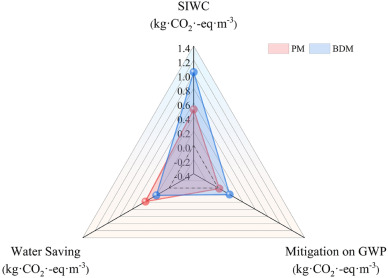
The surprise twist? BDM's advantage in going green. It reduced GWP by 18.27%, a statistically significant decline missing in PM scenarios. This advantage was most pronounced in grain and seed crops, where BDM not only preserved yields but also achieved water saving along with emission reduction. Regionally, BDM worked best in temperate and humid climates—read the U.S. Midwest or Europe's fertile plains—recapturing "climate-smart performance" at higher ecologic compatibility. "BDM reduced global warming potential (18.27%), showing-cutting grain & seed crop differences," the authors further comment, terming its scalability as an emissions hotspot solution.
These results strongly appeal to the food tech community. Mulch films do not work in isolation; they interface with the entire supply chain, from soil cultivation to post-harvest packaging. In food processing plants, where profitability hinges on efficiency, the use of BDM means machinery capable of processing biodegradable material without sacrificing speed or sterility.
The compromises of the study reach much further than the industry, waves from the food processing sector's pursuit of circular economies. Conventional PM, as good as it is, creates microplastic accumulation in the ground, worsened by the UN 2030 Food Systems Summit targets. BDM breaks down in a matter of months biologically, reducing long-term pollution and support for the EU regulation such as the Single-Use Plastics Directive. For processors, this means redesigning equipment: packaging films derived from biodegradable packaging materials must be heat-managed when laminated to prevent premature breakdown, and packaging lines must have real-time sensors for measuring moisture levels in order to achieve optimal shelf life.

The economic stakes are higher in the developing world. The African agricultural sector, which will grow 3% annually by the African Development Bank's estimates, suffers from extreme water scarcity and climatic unpredictability. The smallholder agricultural countries Ghana and Kenya will gain overwhelmingly from BDM's optimization of WUE—potentially save billions of dollars of irrigation expenses.
Financially, meta-analysis puts a number on the ROI. A 29% increase in yield would be worth $50-100 billion additional value worldwide if supported by low-GWP practices only, estimates the FAO. Processors discount the risk premiumize out from green-aware buyers; adopters free premiums in the EU, where carbon border levies are planned. The authors' water-saving synchronisation index also supports BDM's assertion and indicates 15-20% yield-water-emissions benefit overlap which conventional measures do not measure.
Difficulties, naturally, remain. BDM's greater upfront expenses (20-30% more than PM) and soil decay rates for arid conditions that are variable may discourage cash-pinched farmers. Second, N2O booms from mulches require precision agriculture equipment—such as drone-controlled fertilizer applicators—to offset.
This meta-analysis is not only figures—it's a blueprint for food system resilience. As Yuanchen Sun and colleagues conclude, "BDM shows climate-smart performance in temperate and humid regions with better environmental merits," challenging us to leap toward biodegradable technology. To the food tech community, the message could not be clearer: sustainability is not sacrifice; it's the new standard.