How does a self-adhesive labeling machine solve the problem of label detachment?
2025-07-08
Self-adhesive labeling machines are widely used in modern packaging production and can efficiently attach labels to the surface of products. However, the problem of label detachment occurs from time to time. This not only affects the appearance quality of the products but may also cause inconvenience and losses to consumers and enterprises due to the lack of information. The following elaborates in detail the methods to solve the problem of label detachment of self-adhesive labeling machines from four aspects: label quality, process optimization, equipment adjustment and environmental control.
1. Strictly control the quality of labels
Select the appropriate glue
The type of adhesive used in self-adhesive labels is a key factor affecting the pasting effect. The appropriate glue should be selected based on the material of the product, the usage environment and the storage conditions. At the same time, pay attention to the validity period of the glue. Labels with expired glue are prone to not adhering firmly.
Ensure the quality of the label base material
The flatness and uniformity of thickness of the label base material also have a significant impact on the pasting effect. Uneven or uneven thickness of the base material can cause the label to not adhere closely to the product surface and be prone to falling off. Therefore, when choosing a label supplier, the quality of their products should be strictly inspected to ensure that the label base material meets the relevant standard requirements.
Check the printing quality of the label
During the label printing process, the adhesion and drying degree of the ink will affect the overall quality of the label. If the ink has poor adhesion or is not completely dry, it may fall off due to friction or compression during the labeling process, thereby affecting the label's application effect. Therefore, it is necessary to ensure that the label printing quality is good and the ink adheres firmly to the substrate.
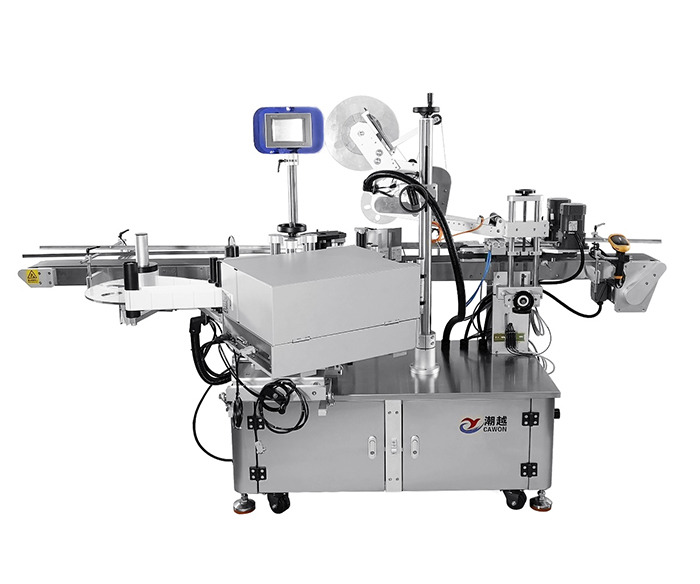
Wholesaler of self-adhesive labeling machines
Second, optimize the labeling process flow
Pre-treat the surface of the product
The cleanliness and roughness of the product surface will affect the adhesion effect of the label. Before labeling, the surface of the product should be cleaned to remove impurities such as dust and oil stains. For products with overly smooth surfaces, methods such as grinding and sandblasting can be adopted to increase their surface roughness and enhance the firmness of label adhesion.
Iii. Adjustment of Parameters of the Labeling Machine Equipment
Optimization that fits pressure and Angle
The bonding pressure of the labeling machine needs to be adjusted according to the material of the label and the surface characteristics of the object to be labeled. Too little pressure will cause the label to not adhere closely to the object being adhered to, while too much pressure may cause the label to deform or the adhesive to be squeezed out, affecting the bonding effect. At the same time, the labeling Angle should be kept parallel to the surface of the object to be labeled to ensure that the label is evenly stressed at the moment of application, avoiding the formation of bubbles or lifting edges due to insufficient local pressure. The pressure distribution can be made more uniform by adjusting the position and hardness of the labeling roller.
Control of labeling speed and label tension
If the labeling speed is too fast, it may cause the labels to be conveyed to the next stage before they are fully adhered, resulting in local detachment. The labeling speed should be reasonably set according to the material of the label and the characteristics of the object to be labeled to ensure that the label has sufficient time to fully adhere to the surface of the object to be labeled. The tension control of the label also needs to be accurate. Excessive tension can easily cause the label to stretch and deform, and after being adhered, it may fall off due to retraction. If the tension is too small, the label may be skewed during the conveying process, the bonding position may be inaccurate, and the adhesion may be affected.
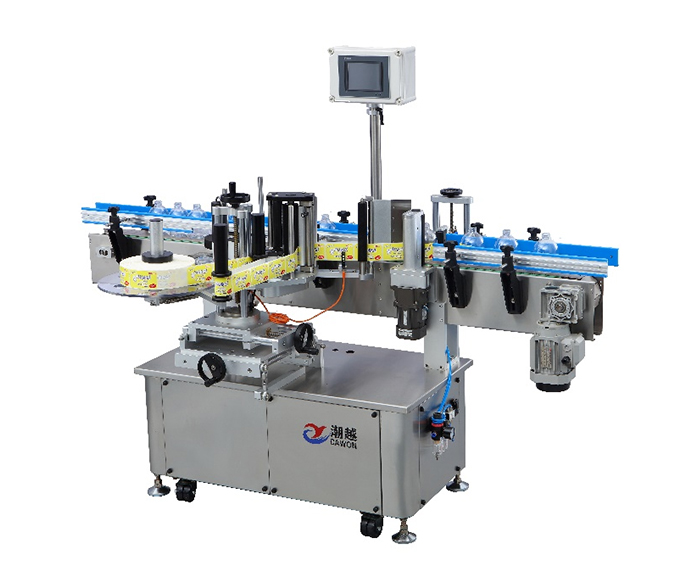
Professional manufacturer of self-adhesive labeling machines
Iv. Control and Adjustment of Environmental Factors
Stable control of temperature and humidity
Environmental temperature and humidity have a significant impact on the viscosity of adhesives. Too low a temperature will cause the adhesive to harden and its viscosity to decrease. Excessively high temperatures may cause the adhesive to soften and overflow, affecting the durability of the bond. When the humidity is high, water vapor is prone to condense on the surface of the object to be labeled, which hinders the adhesion of the label. If the humidity is too low, it may cause static electricity on the surface of the label or the object to be labeled, attract dust and affect adhesion. The environmental temperature and humidity need to be controlled within the range suitable for the adhesive through humidification or dehumidification equipment.
Effective elimination of static electricity and dust
Static electricity can cause a repulsive force between the label and the object to be attached, affecting the bonding effect, and at the same time adsorb dust in the air to contaminate the surface. Static eliminators can be installed near the labeling station to neutralize the static electricity on the surface of the labels and the objects to be labeled. For production environments with a lot of dust, it is necessary to enhance air purification. Dust in the air should be filtered through filters, and the surrounding environment of the labeling machine should be cleaned regularly to prevent dust from adhering to the labels or the surfaces of the objects to be labeled.
Summary
To solve the problem of label detachment of self-adhesive labeling machines, efforts should be made from multiple aspects. Only by comprehensively considering these factors and taking effective measures can the problem of label detachment be effectively solved, and the packaging quality of products and production efficiency be improved.

 ,


 2026