


Introduction
Golf cart batteries are key to performance, lifespan, and usability. Whether you are a golf cart buyer, distributor, dealer, repair specialist, or parts supplier, understanding the nuances of golf cart batteries—such as type, power rating, material, model, brand, and selection criteria—is essential.
Types of Golf Cart Batteries
There are several main types of batteries used in golf carts, each with unique characteristics that affect cost, maintenance, and performance:
1. Lead-acid batteries: The most traditional and widely used battery type, cost-effective, and suitable for deep-cycle applications.
Pros: Affordable, mature technology, and easy access.
Cons: It requires regular maintenance (addition of distilled water), is heavier weight, and has a shorter lifespan than lithium battery options.
2. AGM (Absorbent Glass Mat) Battery: AGM batteries are a sealed lead-acid battery that offers better efficiency and minimal maintenance compared to traditional lead-acid versions.
Pros: Less maintenance, vibration-resistant, and leak-proof.
Cons: Costs more than traditional lead-acid batteries and may be sensitive to overcharging.
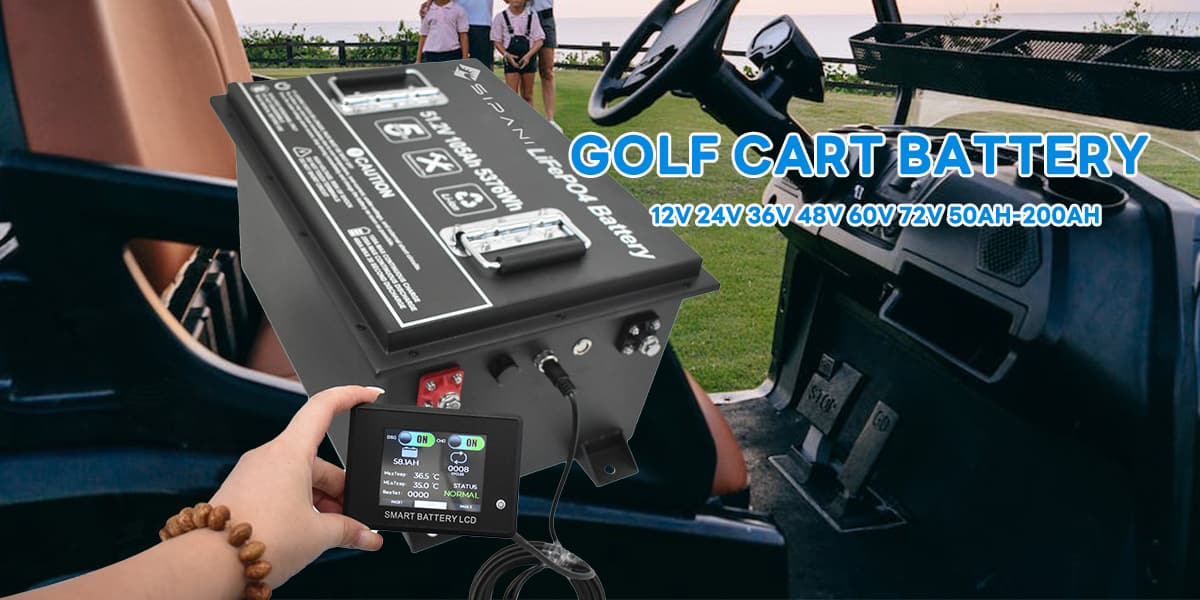
3. LiFePO4 (Lithium-Iron Phosphate) Batteries: LiFePO4 batteries are a newer product on the market but are quickly gaining popularity due to their lightweight, durable properties.
Advantages: Lightweight, long life, fast charging, high efficiency, maintenance-free.
Disadvantages: Higher initial cost, may require special chargers and are generally more expensive to replace.
4. Gel Batteries: Gel batteries are another type of sealed battery that uses a gel electrolyte and are known for their durability and minimal maintenance requirements.
Advantages: Maintenance-free, leak-proof, and can be used in extreme temperatures.
Disadvantages: More expensive than traditional lead-acid batteries and may be sensitive to charging parameters.
Performance and power ratings of golf cart batteries:
Power ratings and performance specifications are crucial when choosing the right battery. Each type of battery offers different ampere-hour (Ah) ratings and voltage options that affect overall golf cart performance.
Voltage options: Golf carts typically require 36V or 48V configurations.
Regarding golf cart battery selection, LiFePO4 batteries are the first choice for many golf cart users due to their long life, lightweight, high efficiency, and low self-discharge rate. More than 90% of golf cart users now choose LiFePO4 batteries to power their electric golf carts and push carts.
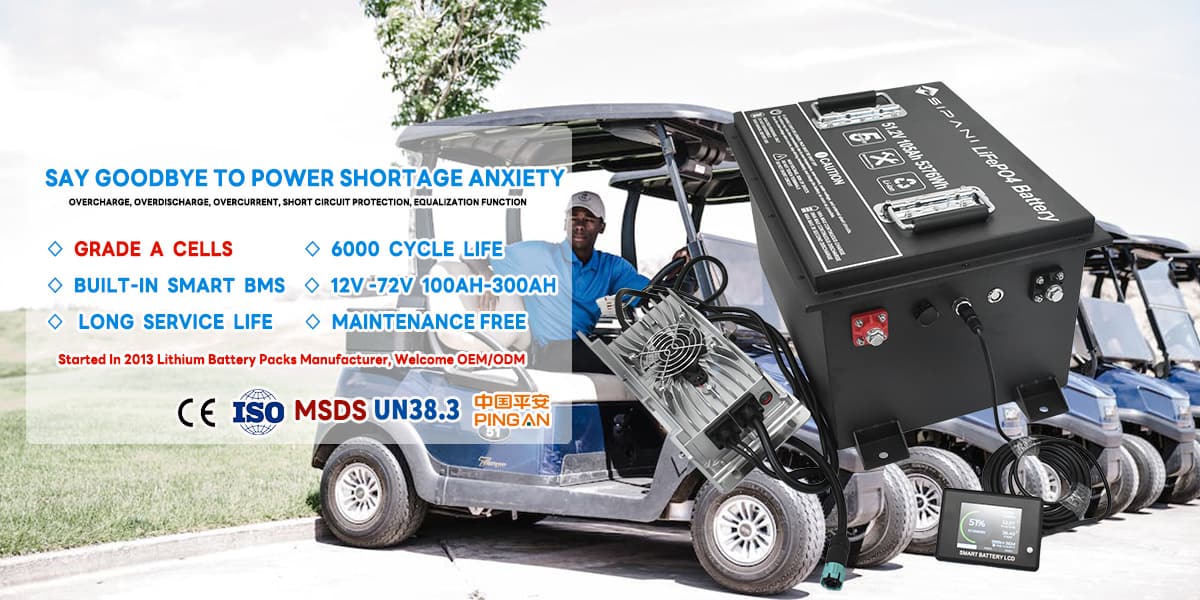
Golf Cart Lithium Batteries are a major advancement in modern battery technology. They are popular in the market for their excellent performance, long life, and low maintenance requirements. Here are some key features of golf cart lithium batteries:
1. Longer service life
A significant advantage of golf cart lithium batteries is their longer service life. Compared with traditional lead acid batteries, lithium batteries can have a cycle life of 2,000 to 6,000 times, which means long-term value and less need for replacement.
2. Low maintenance
Golf cart lithium batteries do not require regular maintenance, such as checking water levels and terminal cleaning, which saves car owners a lot of time and energy. This low-maintenance advantage makes lithium batteries the first choice among golf cart owners.
3. Lightweight
The lightweight nature of lithium batteries is a major advantage for golf carts, with the reduced weight significantly improving maneuverability and reducing wear and tear. Lithium batteries are about one-third the weight of lead-acid batteries.
4. Fast charging
The fast charging capabilities of golf cart lithium batteries is another significant benefit. They charge up to four times faster than lead-acid batteries, ensuring more efficient use of the golf cart and minimizing downtime.
5. Environmental impact
From an environmental perspective, lithium batteries are a more sustainable option. They emit no gases during charging, reducing the environmental impact associated with golf cart operation.
6. Cost-effectiveness
While lithium batteries have a higher initial cost than lead-acid batteries, their longer life and reduced maintenance requirements can lead to significant cost savings over the years.
7. Security features
One of the key safety capabilities of lithium batteries is their stability. They are less prone to problems such as leaking or overheating, reducing the chance of accidents or malfunctions during use.
8. Lithium Iron Phosphate Batteries
Lithium iron phosphate battery is a kind of golf cart lithium battery, which is famous for its strong safety, stability, high-temperature resistance, and good cycle performance. Their theoretical life span exceeds 3,000 charge and discharge cycles, and they can last for more than five years even if they are charged once a day. Lithium iron phosphate batteries have the advantages of high energy density, long life, high power acceptance, and low self-discharge rate, making them ideal for golf carts.
In summary, golf cart lithium batteries represent the cutting edge of battery technology and offer significant improvements over traditional batteries. With their superior performance, long life, and ease of use, they are an excellent choice for anyone looking to upgrade their golf cart.