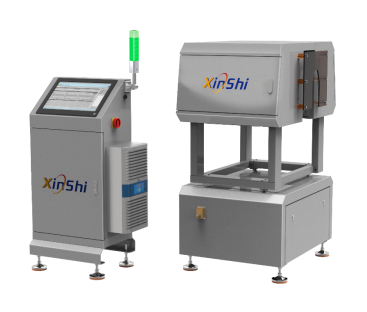
Label Inspection
1. Equipment Introduction
The label‑inspection machine is intelligent equipment based on machine‑vision inspection technology. With high‑definition vision system and AI algorithms, it conducts all‑round inspection on bottle label status. It can accurately identify position‑deviation defects such as missing label, high‑position label and low‑position label, detect abnormal conditions of opaque‑tape label joints, as well as label misprinting, missing printing, label skew and other faults. Featuring high‑speed inspection capacity and high inspection accuracy, it adapts to various bottle types and label materials. Widely applied in pharmaceutical, food, cosmetic and other industries, it realizes automatic control of label‑pasting quality and effectively improves normalization and consistency of product packaging.
2. Equipment Layout
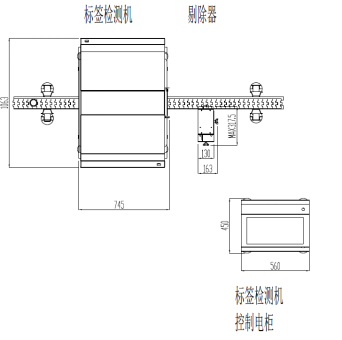
2.1 Main Control Module Composed of label‑inspection analysis system and general control system. It governs operation of all modules, analyzes and judges collected information of product inspection zones. Once defective product is identified, reject signal is transmitted to reject module for product removal.
Touch screen is installed inside control cabinet for daily operation. Touch screen reaches IP65 industrial protection grade with good adaptability to field environment. Multi‑channel alarm system triggers acousto‑optic alarm upon abnormal conditions. Control cabinet is manufactured in compliance with German Rittal standard. Full panels are made of SUS304 stainless steel.
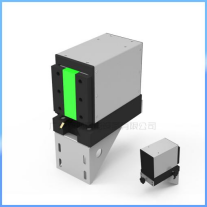
2.2 Label Image Acquisition Module The label‑image acquisition module consists of 4 high‑resolution CCD area‑array cameras, 4 high‑definition industrial lenses, LED light sources and other components. Four inspection stations capture images from corresponding angles. After products enter inspection position, four acquisition stations collect label images within short time. Front‑mounted light sources clearly outline label contours. Adopting Xinshi special automatic matching algorithm & judgment‑processing algorithm with built‑in image‑stitching function, images captured by four stations can be stitched into one complete label image for easier inspection. It can automatically identify and reject label defects such as missing label, high/low label, joint‑label and so on.
2.3 Rejector Matching standard rejector, applicable for line speed up to 50000 BPH. The standard rejector adopts FESTO single‑acting cylinder coupled with nylon reject block. PLC and relay control cylinder via MAC high‑speed solenoid valve to drive nylon reject block for linear rejection of upstream defective products with high precision & efficiency.
3. Inspection Accuracy
| Inspection Item | Inspection Requirement | Illustration | Defect Description | Inspection Accuracy | False‑Rejection Rate |
|---|---|---|---|---|---|
| Label Inspection | Label presence / absence | 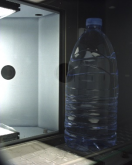 |
Missing label | 100% | 0 |
| High‑position label | 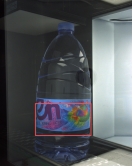 |
Label position offset ≥2 mm | >99.98% | ≤0.02% | |
| Low‑position label | 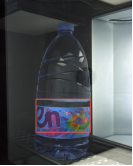 |
Label position offset ≥2 mm | >99.98% | ≤0.02% | |
| Label seam misalignment | 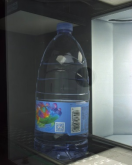 |
Misalignment>2 mm | >99.98% | ≤0.02% | |
| Label wrinkling | 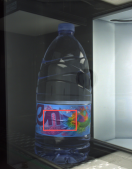 |
Wrinkle length 20 mm, bulge>1 mm | ≥99.98% | ≤0.02% |
Glossary
‑ Rejection Rate: Number of rejected test samples / total test quantity
‑ False‑Rejection Rate: Total false‑rejected quantity / total production quantity
4. Technical Notes
4.1 Products shall be conveyed stably without shifting or tilting. Conveyor chain speed shall remain stable without fluctuation.
4.2 Products shall pass through inspection system free of external pressure. Consistent gap between adjacent products must be maintained to guarantee inspection reliability & accuracy.
5. Technical Features
5.1 Hardware configuration & appearance design comparable with fully‑imported equipment
5.2 Flexible remote technical service: parameter modification, program upgrade etc. can be completed without on‑site personnel support.
5.3 User‑friendly software interface; camera parameters can be flexibly modified via configuration files.
5.4 7×24‑hour technical service standard. 3.5.5 MES system interface available.
5.5 MES system interface available.