
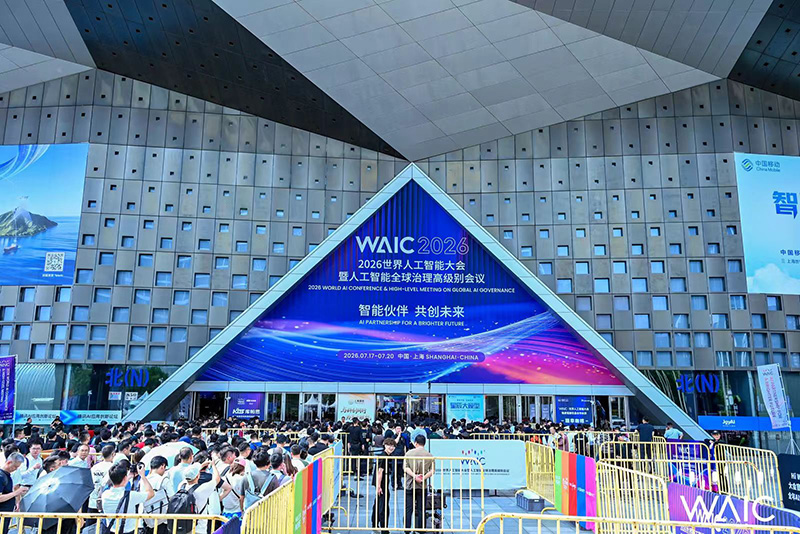
In 2026, while food factories are still struggling with labor shortages, flexible production challenges, and costly unplanned downtime, WAIC 2026 already showcased an AI chef capable of handling non-standard ingredients autonomously, edge AI boxes that bring predictive maintenance costs down to an affordable level, and industrial agents that dramatically boost efficiency without replacing legacy systems. After on-the-ground research at the show, the FoodTechX team found that the next leap for modern food factories is arriving faster than expected.
From July 17 to 20, 2026, the World Artificial Intelligence Conference (WAIC 2026) was held across three venues in Shanghai — Expo, Zhangjiang, and West Bund. The conference featured over 100,000 square meters of exhibition space, 1,117 exhibitors, and 4,486 products on display, 351 of which were global debuts. Over four days, approximately 400,000 visitors attended, 177 corporate procurement delegations participated, and intended transaction volume reached RMB 20.36 billion.
FoodTechX attended as observers, focused on one question: Which of these industrial AI technologies, primarily designed for automotive, electronics, and pharmaceutical applications, can be adopted by modern food factories within the next 12 months?
Below are four key observations we brought back from the show floor.
I. Embodied Intelligence Moves from Demo to Production Line — Flexible Food Manufacturing Now Has a Viable Solution
The most notable change in the robotics zone of Hall H3 was that robots were no longer performing backflips or picking up fixed objects; instead, they were running continuously in 1:1 production line scenarios. The "AI Chef" jointly demonstrated by Xixi Intelligence and China Eastern Airlines could autonomously complete order parsing, ingredient recognition, grasping, cutting, and plating. Its food-specific Physical AI model has already been deployed at China Eastern's in-flight catering base, producing nearly 10,000 meals per day on a single line.
What this means for food factories: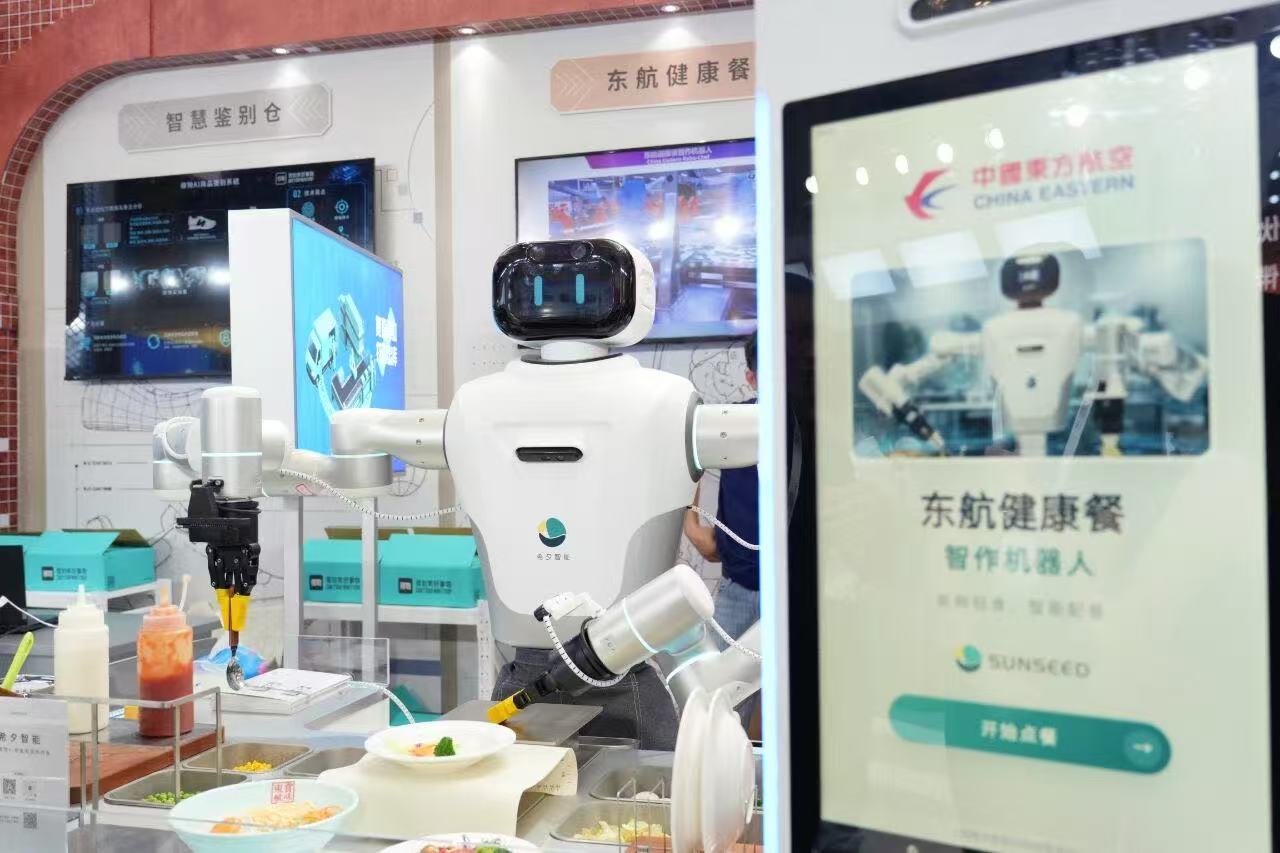
• Weight, shape, and texture variations of non-standard ingredients are no longer barriers to automation. Flexible sorting, breading, weighing, and plating now have mature solutions.
• Multi-SKU, small-batch, quick-changeover production models have shifted from "automation doesn't pay off" to "not automating is the expensive option."
However, food factories don't buy "a robot" — they buy "a smart module that completes a specific process step." This is where the platform adds value: assembling robots, grippers, vision systems, and recipe libraries into reusable production line units.
FoodTechX Perspective: In our F1 (Processing Equipment), F3 (Packaging Equipment), and F10 (Kitchen & Vending Equipment) categories, we expect to see embodied intelligence integrators replacing traditional specialized machines in the coming year. What buyers need is not a single robot, but a "robot + gripper + vision + recipe library" production module — precisely the kind of cross-supplier assembly and matching we facilitate.
II. Industrial Agents and Edge Inference Go Live — Predictive Maintenance Costs Drop to an Acceptable Range
At WAIC 2026, multiple industrial AI vendors presented digital twin cases from the food industry. An undisclosed global snack giant used virtual commissioning to optimize its dough mixing process, achieving a 7% reduction in energy consumption per unit of product and approximately 10% capacity improvement. This model is now being gradually migrated to sauce and beverage categories.

Meanwhile, cloud providers including Huawei, China Telecom, and China Mobile showcased their "edge-cloud" collaborative infrastructure in Hall H2. These edge computing solutions are already being piloted in select dairy and beverage production lines. FoodTechX is currently engaging with relevant equipment suppliers and cloud vendors to validate stability in high-humidity, high-grease environments.
What this means for food factories:
• High-unplanned-downtime assets such as filler bearings, cold storage compressors, and retort seals can be pilot-tested with low-cost sensors and open-source models.
• Sensitive data — recipes, process curves, customer order structures — stays on-site, addressing the core concern of agri-food processors.
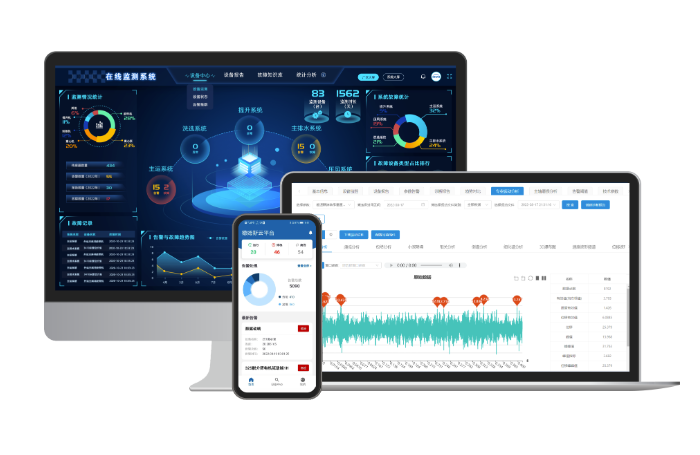
FoodTechX Perspective: We plan to integrate sensor suppliers, edge computing units, open-source vibration models (such as SDyPy, ROSS, OpenSees, and MxSim), and OEMs into configurable solution packages, rather than selling individual components in isolation.
III. AI Agents Reshape Enterprise Software: Not a Replacement, But a "Brain That Gets Things Done"
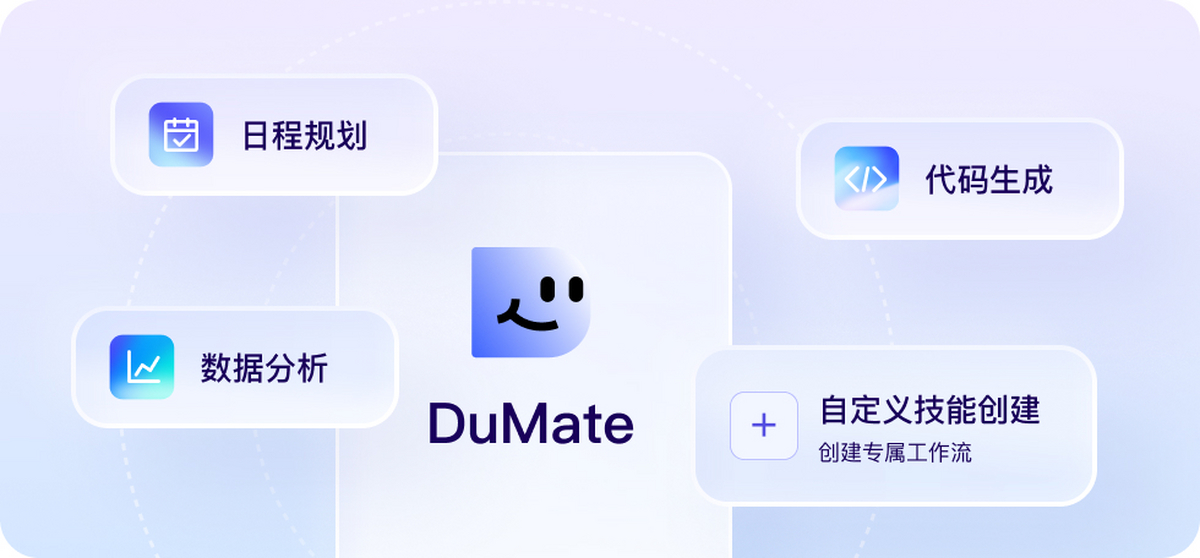
Baidu DuMate, Tencent WorkBuddy, and Kingsoft WPS Lingxi all showcased AI Agents' ability to call enterprise software tools: reading documents, decomposing tasks, executing SQL queries, and filling forms.
Applied to daily food factory operations:
• When a sales order comes in, the Agent automatically checks ERP inventory, breaks down the BOM, queries MES for current workstation load, and replies with a confirmed delivery date.
• When a quality inspection anomaly occurs, the Agent pulls lab data (from our F7 category), compares it against the HACCP plan, and generates a corrective action report.

This approach does not require tearing out existing MES systems. Instead, it adds a layer of "digital colleagues who communicates" on top of legacy systems.
For small and medium-sized food factories without MES deployment, lightweight SaaS providers in our F13 (Public Service) category offer "Agent-as-a-Service" — granting read-only database access enables cross-system reconciliation and automated reporting to go live within one week.
FoodTechX Perspective: Many small and medium food factories still run on Excel plus standalone financial software. Rather than convincing them to spend millions on an MES, it makes more sense to first deploy a lightweight Agent that automatically connects cross-system reconciliation, traceability ledgers, and compliance reports. Our F13 software and consulting partners can restructure their service packages around this scenario.
IV. Full-Chain Traceability and the Closed-Loop "Unmanned Factory": Suppliers Exist for Every Link
Another undercurrent at the conference was the convergence of identifier resolution, blockchain, and vision technology: from raw material batches and process parameters to cold chain temperatures — everything becomes an extractable event stream.
Mapping this against FoodTechX's category framework — from F1 Processing Equipment, F2 Filling Equipment, F5 Water Treatment, F6 Utilities, F7 Laboratory Equipment, to F11 Parts & Consumables — the so-called "unmanned factory" is not about purchasing one giant system. It is about connecting and closing the loop across these links:
Sales Order → Raw Material Inbound/Outbound → Production Control → Finished Product Warehouse → Cold Storage / Refrigerated Truck / Display Cabinet → Financial System → Tax System
Each link has established equipment and software suppliers. What the industry lacks is the middle layer that assembles them according to specific production line scenarios.
Closing: Post-2026, RFQs for Food Factories Will Include Three New Evaluation Dimensions
WAIC 2026 left concrete tasks for platforms like FoodTechX:
First, convert exhibitor resources into matchable solution combinations. Embodied robotics companies, edge AI box vendors, vision inspection algorithm providers, and traditional filling line manufacturers do not cross-acquire customers today — but food factories need combinations, not individual items.
Second, establish "open-source models + local deployment" as the default option for food factories, not a premium add-on.
Third, organize supply chains around scenarios rather than product categories. The insight "how a sauce factory with RMB 30 million annual output can reduce labor costs by 30% using modular sterilization + AI inspection + predictive maintenance" is far more valuable than simply promoting a sterilizer.
FoodTechX (foodtechx.com) continues to deepen its coverage across F1 through F13 — the full chain of equipment and service categories. This year's WAIC confirmed that our platform's next-phase focus will shift from "information listing" to "scenario-based assembly" — rapidly matching hardware, models, deployment, and interface solutions based on each client's specific production line pain points.
We anticipate that starting in 2026, leading food enterprises will progressively incorporate "can it run models locally, can it connect to Agents, can it perform rapid SKU changeovers" into their RFQ evaluation criteria — just as they now default to asking about CIP cleaning and HACCP compliance.
FoodTechX is actively establishing partnerships with embodied intelligence, edge computing, and industrial Agent vendors from WAIC 2026. We welcome food factory procurement leaders to contact us and explore how to apply these frontier technologies to your production lines — quickly and with minimal risk.
Note: WAIC official data cited in this article (exhibition area, number of exhibitors, visitor count, procurement delegation numbers, intended transaction volume) are sourced from publicly disclosed information by the organizing committee. Technical case studies are compiled from vendor on-site demonstrations and public materials. FoodTechX assumes no joint liability for the accuracy of third-party case studies.
Frequently Asked Questions (FAQ)
Q1: What is embodied AI, and how does it relate to food factories?
A: Embodied AI refers to AI systems that possess a physical body and can interact with their environment—such as robots capable of autonomously grasping, cutting, and plating food. In food factories, it can replace manual labor for flexible tasks involving non-standardized ingredients (e.g., sorting, coating, and portioning), making it particularly suitable for production scenarios characterized by high SKU counts and small batch sizes.
Q2: How can food factories implement predictive maintenance at a low cost?
A: You can start with critical equipment (such as filling machine bearings or cold storage compressors) by deploying low-cost vibration and temperature sensors combined with open-source machine learning models for anomaly detection. The initial investment is typically in the range of tens of thousands of yuan—far less than the financial losses caused by unplanned downtime.
Q3: Can small and medium-sized food factories use AI Agents without an existing MES system?
A: Yes. Some SaaS providers offer an "Agent-as-a-Service" model; by simply granting read-only access to your ERP or accounting software databases, you can launch features like cross-system reconciliation and automated reporting within a week—without needing to deploy an MES first.
Q4: How does FoodTechX help food factories match with these new technologies?
A: FoodTechX covers the entire equipment and service spectrum (from F1 to F13). Based on a client's specific production line pain points and budget, we can rapidly match them with suppliers of embodied robots, edge computing solutions, and AI Agent software, while also providing services to integrate solutions across multiple vendors.