
In September 2026, China's food industry will usher in a significant iteration of standards. A series of national standards recently released by the State Administration for Market Regulation, the National Health Commission, and other departments will be implemented from September 1st to 2nd, 2026. These standards cover multiple key links in the industry chain, from basic food safety limits, production hygiene standards, and specific product quality to processing equipment safety, totaling ten standards (including four mandatory food safety standards and six recommended product/equipment standards) . This signifies that China's food standardization work is developing towards a more scientific, refined, and comprehensive approach to safety management across the entire supply chain.
The following is an overview of the ten core standards to be implemented this time:
I. Basic Food Safety Standards: More Scientific Limits and More Rigorous Controls
GB 2762-2025 National Food Safety Standard : Limits of Contaminants in Food
As the cornerstone of China's food safety standards system, this revision integrates multiple announcements and adjusts application principles. Key changes include: eliminating the practice of calculating heavy metal limits for dried meat products based on dehydration rate, and implementing direct limits ; adjusting the nitrite limit in packaged drinking water (from 0.005 mg/L to 0.1 mg/L) ; and officially clarifying the nitrite limit in edible bird's nest as 30 mg/kg . The standards have become significantly more refined and are further aligned with international standards.
GB 14881-2025 National Food Safety Standard - General Hygiene Standard for Food Production
This standard is the "mother law" of food production. This revision modifies the requirements of several chapters, including site selection, plant, facilities, hygiene management, and process control, and adds an appendix on the application guidelines of HACCP principles , promoting enterprises' hygiene management from "compliance" to "systematic risk prevention and control".
GB 17405-2025 National Food Safety Standard - Good Manufacturing Practices for Health Foods
The new standard comprehensively updates the requirements for scope, terminology, plant facilities, food safety management, and production process control. It also adds content such as product recall and traceability management, and guidelines for dividing work areas for different categories of health food , reflecting the systematic requirements for health food production from process control to full traceability management.
II. Specific Product Standards: Clearer Definitions and More Scientific Indicators
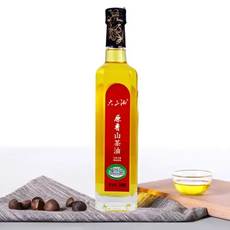
GB/T 35026-2026 Tea Seed Oil
The revised standard removed some physicochemical indicators such as refractive index and iodine value, changed the range of main fatty acid composition parameters , making quality evaluation more focused on the essential characteristics of oils, and added quality indicators for tea seed crude oil , thus standardizing the trade process.
GB/T 9961-2026 Fresh and Frozen Mutton
The standard has changed the product terminology and classification, added product types and cutting technical requirements , deleted some old physicochemical and microbiological indicators, and added a thawing water loss rate indicator , making the standard more in line with the actual needs of modern mutton production and distribution.
GB/T 9959.2-2026 Fresh and frozen pork and pork by-products - Part 2: Cut fresh and frozen lean pork
The new standard changes the product categories and technical requirements, expanding the scope of segmented lean pork to include major finely segmented lean pork products , thus better meeting market demand for finely segmented products.

III. Processing Equipment Standards: Moving Towards Automation, Safety, and Hygiene
GB/T 27519-2026 General Requirements for Livestock and Poultry Slaughtering and Processing Equipment
This standard replaces the 2011 version and has been comprehensively revised and refined in terms of design, materials, processing, assembly, installation, safety, and performance. It has added independent chapters such as "Processing Requirements", "Assembly Requirements", and "Installation Requirements" , and puts forward more systematic and stricter requirements for the hygiene and safety, mechanical safety and operational performance of the equipment.
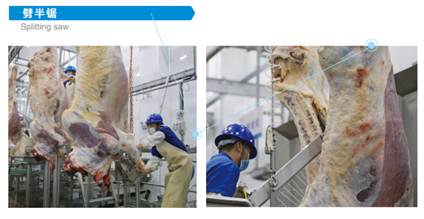
GB/T 47150-2026 "Livestock and Poultry Slaughtering and Processing Equipment: Carcass Splitting Equipment" (First Standard)
The standard clarifies the types and basic parameters of carcass splitting equipment, and stipulates its technical requirements and inspection rules. It also specifies performance indicators such as processing capacity, splitting rate, splitting loss, and "meat-bone deterioration" of the splitting equipment , promoting the automation and standardization of key slaughtering processes.
IV. Food Contact Materials and Storage & Transportation Technologies: Moving the Control Point Forward
GB 4806.10-2025 National Food Safety Standard for Coatings and Coatings for Food Contact Materials and Articles
The new standard integrates and replaces the old standard and several announcements, revising all core content including scope, terminology, raw material requirements, and physicochemical indicators. The biggest change is that it systematically specifies the basic raw materials that can be used and the requirements for specific migration limits in the form of a standard appendix list, marking the beginning of a new era of "preventive list management" for the management of food contact coatings.
GB/T 26880-2026 Technical Specification for Drying of Grain and Oil in Warehouses
The revised standard added the term and definition of "high moisture content grains" and correspondingly added clauses on in-storage drying, whole-storage cooling and moisture reduction, and two-step drying combined with mechanical drying for high moisture content grains. At the same time, it added energy consumption requirements for in-storage drying , making the technical specifications more in line with the diverse scenarios in actual production.
Platform Perspective: Standards Evolution Drives Industrial Upgrading, Excellent Supply Chains Empower Global Cooperation
The concentrated implementation of these ten new standards clearly outlines the trajectory of standardization development in China's food industry: from general specifications to specialized in-depth implementation, from end-product inspection to full-process safety control, and from qualitative description to quantitative and checklist-based management. This not only reflects the continuous improvement of China's food safety management level but also the inevitable requirement for the industry's refined and professional development.
For foodtechx.com and its global partners, this is both a professional industry reminder and a signal of market opportunity. The platform brings together high-quality suppliers who possess forward-looking technological reserves and quality management systems, whether providing production line designs that comply with new hygiene regulations, food machinery that meets higher standards, or high-quality raw materials that comply with the new contaminant limits. They are not only able to confidently meet the requirements of the new standards, but also, with their technological capabilities that exceed those standards , provide high-quality, highly reliable products and services to domestic and international customers. We welcome global buyers and stakeholders to closely monitor the development of Chinese standards and connect with China's high-quality supply chain through the platform to jointly seize new value in industrial upgrading.
If needed, please register/login to www.foodtechx.com to download the relevant standards for reading!