
Introduction: Unlocking Sustainable Poultry Nutrition with Broccoli By-Products
In the quest for more sustainable and functional animal feed ingredients, researchers are turning agricultural by-products into high-value solutions. A recent open-access study published in Poultry Science explores the use of broccoli stem-and-leaf meal (BSLM) — often discarded as waste — as a dietary supplement for aged laying hens. The results are promising: low-level inclusion (especially 1%) significantly enhances production performance, egg quality, antioxidant capacity, gut immune response, and cecal microbiota composition during the late-laying phase.
This research is particularly relevant for the food technology and poultry industry, as it demonstrates how plant-based by-products can reduce feed costs, improve animal welfare, and support sustainable egg production amid rising global demand.
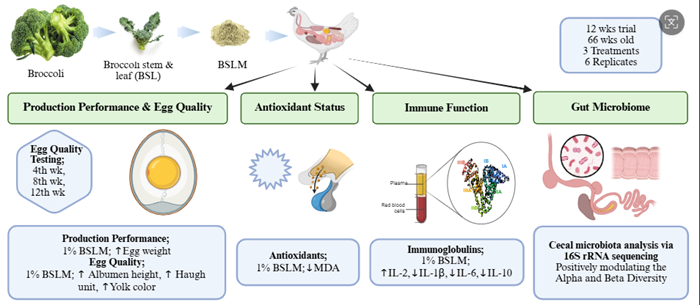
Study Design and Methods Overview
The 12-week feeding trial involved 270 Hy-Line Brown laying hens (aged 66 weeks at start), randomly assigned to three treatment groups:
- Control: Basal corn-soybean meal diet
- 0.5% BSLM supplementation
- 1% BSLM supplementation
- Weeks 1–4 (hen age 66–69 weeks)
- Weeks 5–8 (70–73 weeks)
- Weeks 9–12 (74–77 weeks)
Additional analyses included:
- Egg quality parameters (shell thickness, albumen height, Haugh unit, yolk color)
- Serum biomarkers (glucose, alkaline phosphatase, malondialdehyde for oxidative stress)
- Jejunal mucosal cytokines (IL-2, IL-1β, IL-6, IL-10) for gut immunity
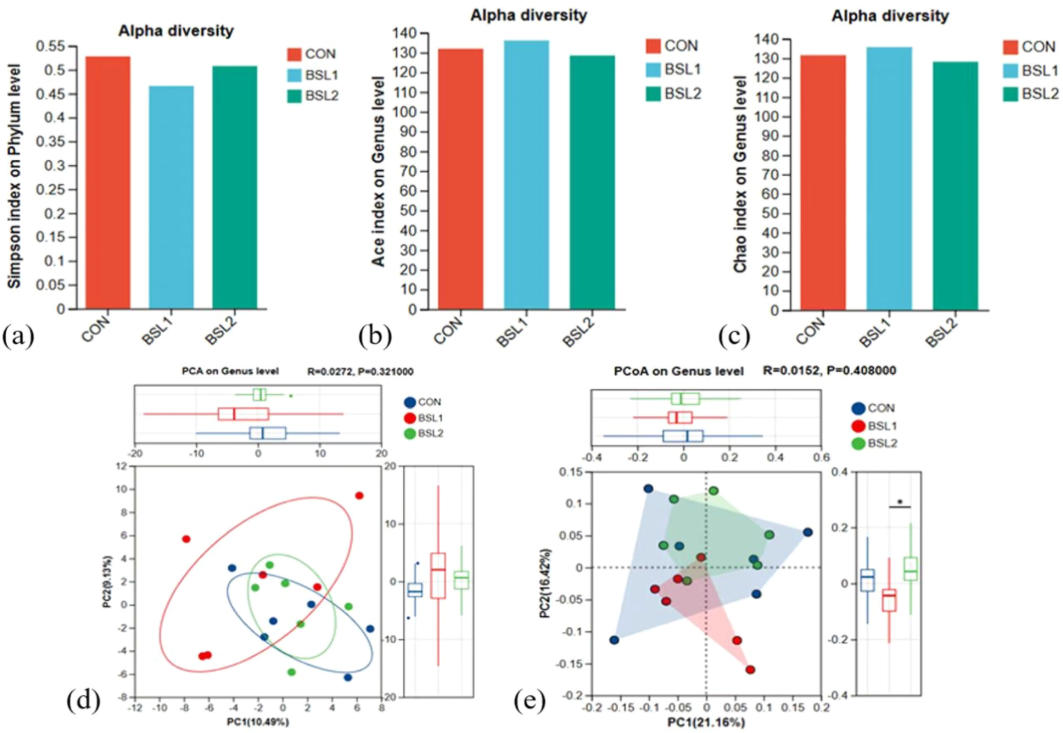
- Cecal microbiota profiling via 16S rRNA sequencing
Key Results: Performance, Egg Quality, and Health BenefitsImproved Egg Production and Feed Efficiency
- Dietary BSLM significantly increased egg laying rates across all phases and overall (P < 0.05), with the 1% group achieving the highest rates.
- Feed intake remained similar among groups, but both BSLM levels improved the feed-to-egg conversion ratio compared to control (P < 0.05).
- Egg weight was higher in the control during the final phase (weeks 9–12), but overall productivity favored BSLM groups.
- 0.5% BSLM increased eggshell thickness (P < 0.05).
- 1% BSLM improved albumen height, Haugh unit (freshness indicator), and yolk color (P < 0.05) — desirable traits for market appeal and consumer preference.
- 0.5% BSLM reduced serum glucose and alkaline phosphatase levels (P < 0.05).
- 1% BSLM significantly lowered malondialdehyde (MDA), a key marker of lipid peroxidation and oxidative stress (P < 0.05), suggesting stronger antioxidant protection in older hens.
- Jejunal cytokines shifted toward an anti-inflammatory profile in BSLM groups: 1% supplementation increased IL-2 while decreasing pro-inflammatory IL-1β, IL-6, and IL-10 (P < 0.05).
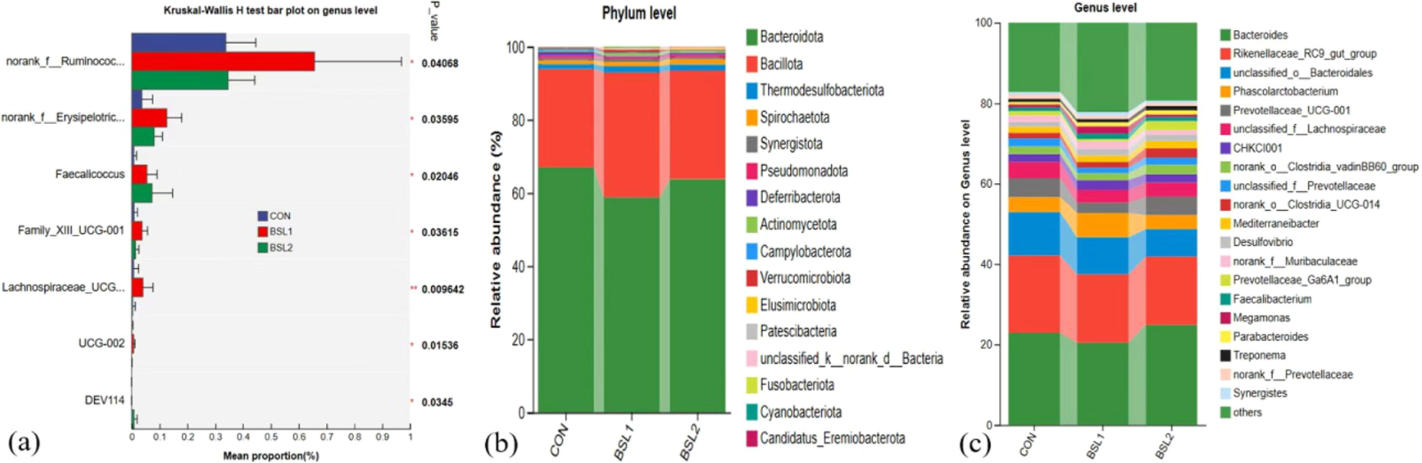
- 16S rRNA analysis showed selective enrichment of beneficial bacteria: short-chain fatty acid (SCFA)-producing genera like Ruminococcaceae and Lachnospiraceae, plus Parabacteroides.
- These microbiota changes correlated with elevated IL-10, indicating microbiota-driven anti-inflammatory effects in the gut.
Why This Matters for FoodTech and Poultry Industry
The findings position broccoli stem-and-leaf meal as a promising functional feed additive for late-phase laying hens. Key implications include:
- Sustainability: Repurposing vegetable processing by-products reduces agricultural waste and supports circular economy principles in feed production.
- Animal Health & Welfare: Improved antioxidant status, reduced inflammation, and healthier gut microbiota help combat age-related decline in laying performance.
- Economic Benefits: Better feed efficiency and egg quality can lower production costs and enhance product value.
- Food Safety & Quality: Healthier hens and superior egg attributes (e.g., darker yolks, firmer albumen) align with consumer demand for nutritious, high-quality eggs.

Conclusion: A Step Toward Greener, Healthier Poultry Systems
Supplementation with 1% broccoli stem-and-leaf meal emerges as the optimal level for improving overall performance, egg quality, oxidative stress resistance, gut immune balance, and beneficial microbiota in aged laying hens. These outcomes highlight BSLM's potential as a low-cost, natural strategy to boost productivity and sustainability in commercial egg production.
As the poultry sector faces pressure to reduce environmental impact while maintaining output, innovations like this could play a key role in next-generation feed formulations.
Original DOI: https://doi.org/10.1016/j.psj.2025.106288 (Poultry Science, open access)
Read the full paper here: ScienceDirect Link
Read the full paper here: ScienceDirect Link
Keywords: broccoli stem leaf meal, laying hens feed, poultry gut microbiota, egg production improvement, antioxidant status hens, sustainable poultry nutrition, functional feed ingredients, gut immunity poultry, aged laying hens performance